
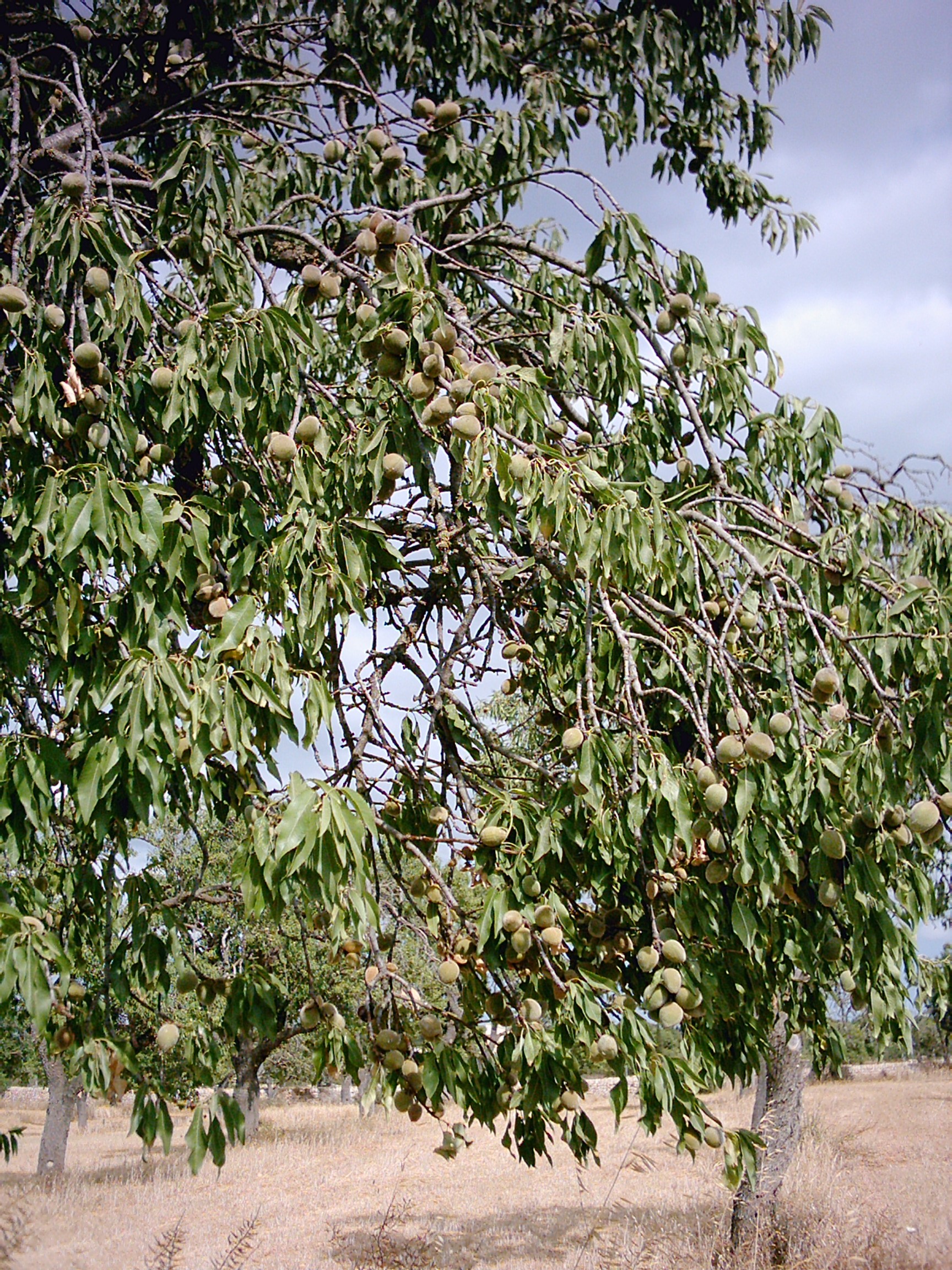
Prunus amygdalus
The Almond Tree is a treasured presence in many landscapes, including the sun-kissed groves of California, the enchanting realms of southern Europe, and the picturesque Mediterranean countries. This cultivated wonder often graces our world, standing proudly at heights ranging from 10 to 20 feet. Its branches, adorned with thorns, bear leaves with a lanceolate shape, finely serrated like the delicate edges of a vintage scroll.
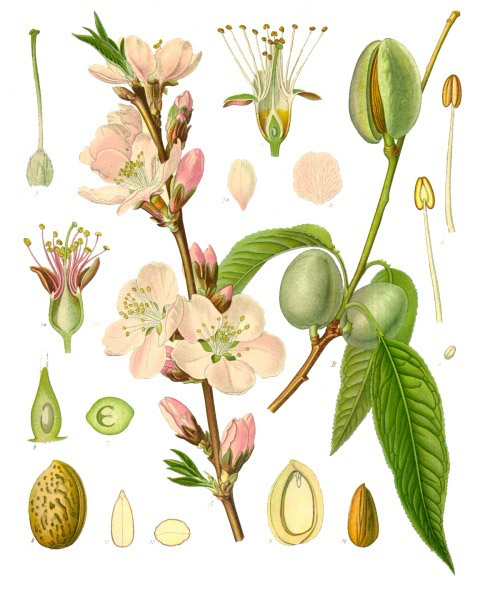
As the seasons turn, the Almond Tree delights us with it large, captivating flowers. These blooms, often seen in pairs, offer a soft pallet of colors, ranging from a gentle rose to a soothing whitish hue. Every aspect of the Almond Tree carries its own touch of enchantment, making it a cherished presence in both the herbal and mystical realms.
Other Names
Greek Nuts, Jordan Almond
Magical Uses
Almonds, the precious seeds held within the protective embrace of the Almond Tree’s fruit, along with the leaves and wood of this sacred tree, are revered in the realm of magic, especially when it comes to matters of prosperity and wealth. Harnessing their mystical energies, practitioners utilize them in various spells and rituals to manifest financial abundance and blessings.
In the enchanting folklore of the Almond Tree, a unique belief echoes through time: climbing this revered tree is believed to pave the way for triumph in one’s business endeavors. It signifies ascending towards success, both literally and symbolically, embracing the prosperous energy this magical tree bestows.
Delving deeper into the magic of almonds themselves, consuming these magical seeds is believed to possess transformative powers. Almonds are thought to possess the ability to alleviate or combat fevers, bring not only physical relief but also infusing the partaker with wisdom – a true elixir for the body and soul. An intriguing magical quirk involves consuming five almonds prior to consuming alcohol, believed to act as a shield against intoxication, allowing one to revel without losing their clarity of mind.
The mystical bond with the Almond Tree extends further, with its wood being a cherished material for crafting magical wands. In certain magical traditions, almond wood is revered as it aligns with the elemental rule of Air – a fundamental component of the magic wand’s essence. Crafting a wand from this sacred wood taps into the boundless energies of Air, amplifying the wand’s potency and its connection to the magical forces.
Lastly, a simple yet profound ritual involves placing almonds within your pocket, inviting the promise of uncovering hidden treasures. This enchanting act symbolizes carrying the potential for prosperity and abundance wherever you go, a beautiful reminder of the magic that surrounds us in the everyday world.
Medicinal Uses
Almonds, often associated with their delicious flavor, possess mystical qualities that resonate with our physical and spiritual well-being. Demulcent (soothing), emollient (moisturizing), and pectoral (beneficial for the chest and respiratory system) are the hidden gems of almonds, offering their gentle yet powerful magic.
In your quest for a radiant and clear complexion, ground almonds make a magical addition to your skincare ritual. Incorporating them into your facial scrub for a cleansing experience that awaken your inner beauty. Their emollient nature, which softens and hydrates, extends to the realm of cosmetics, making them a valuable ingredient in various beauty elixers.
But the mystical journey with almonds goes beyond the surface. The oil derived from the bitter variety of almonds carries sedative properties, offering solace to both body and soul. At times, this special oil finds its way into soothing cough remedies, a testament to its remarkable essence.
The sweet variety of almonds also unfolds its own brand of magic. Its oil becomes a comforting companion in internal medications, nurturing the body from within. Furthermore, it double as an emollient when used externally, offering solace to the skin and promoting its natural radiance.
Yet, the enchantment doesn’t end there. Almond butter, a treasure derived from these mystical seeds, proves to be a rich protein substitute, akin to the beloved peanut butter. It often earns the favor of diabetics, harmonizing with their unique dietary needs.
In the world of almonds, every seed is a key to a world of magic and well-being, ready to enhance our physical and spiritual journey.
Harvesting:
The kernels (the ‘almond’ itself) are used.
Preparation:
Almond butter, a delectable and healthier alternative to store-bought spreads, can be crafted right in your kitchen:
- Gather a food processor or blender and a pinch of patience.
- Roast raw almonds in the oven, awakening their natural flavors.
- Blend almonds until they transform from clumps to creamy butter.
- Add salt for flavor or enhance it with cinnamon, vanilla, or sweeters.
- Let it cool, transfer it to a mason jar, and store in the refrigerator for up to two weeks.
As mentioned above, Almonds can also be ground up with a food processor or mortar and pestle to be used as an emollient.
How to Grow
For those who living in USA Zones 7-9, cultivating almond trees can be a rewarding journey, filled with the promise of delicious nuts and a connection to nature. Here’s your magical roadmap:
Planting and caring for your tree:
- Choose a sunny spot with at least 15 to 20 feet of space around it. Almond trees thrive in full sun and well-draining loamy soil.
- Ensure your sapling is well-hydrated by giving its rootball a gentle hose shower before planting.
- Dig a hole to match the sapling’s nursey depth (usually 28 to 24 inches). Place the tree gently, backfill with soil, and water generously. Mulch the base for moisture retention.
- Prune small twigs near the base to focus growth on the trunk and branches.
- Almond trees take around 5 years to bear fruit, so don’t worry if you don’t see nuts right away.
- While they can endure drought, young almond trees need regular watering, about once a week. Don’t soak them, as it can lead to root rot.
- Fertilize your tree with small doses of nitrogen in spring for young trees and a one-time urea treatment for mature fruiting trees.
- Keep an eye out for navel orangeworms and peach tree borers, and harvest nuts promptly to deter pests. Use Bacillus thuringiensis spray for protection.
- Be gentle during harvesting to prevent bark damage that can lead to disease. Use clean tools for pruning.
Your almond tree will thrive with care and patience!
 seaxwica.org