
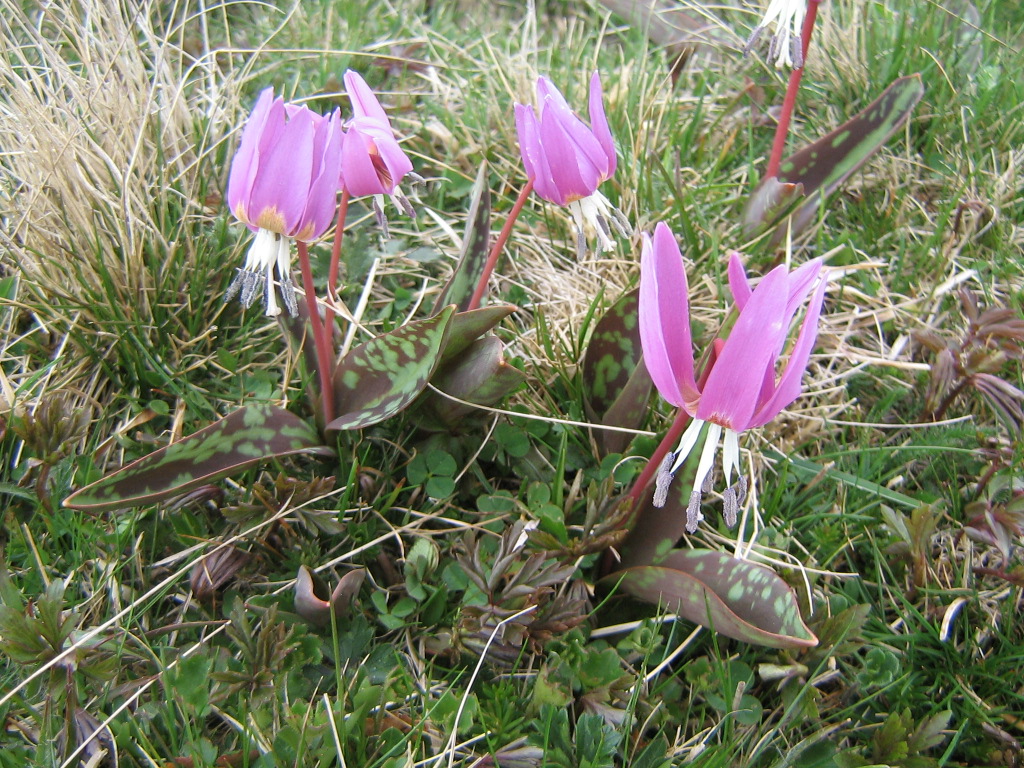
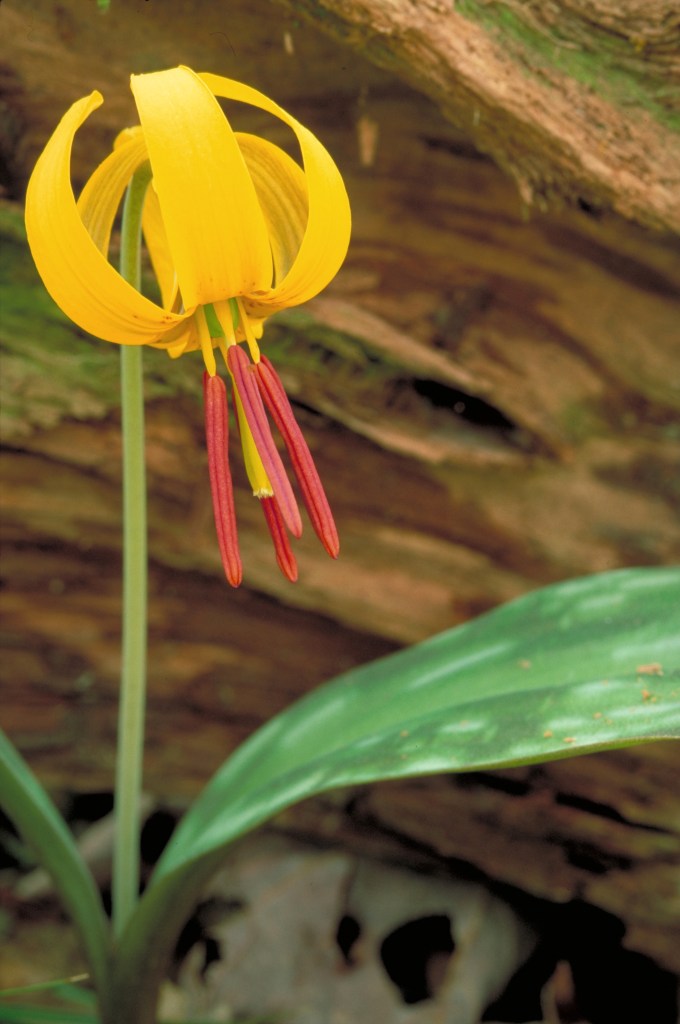
Erythronium americanum
Adder’s tongue is a perennial plant found across the United Sates, thriving in areas like open fields and sparse woods with nutrient-rich soil. The plant stands out with its bulbous root, featuring a light brown exterior and a white interior. Its distinctive appearance includes two slender, pale green leaves adorned with spots that can be purplish or brownish in color. Additionally, it blooms a solitary, pendulous yellow flower during the months of April or May.
Other Names
American Adder’s Tongue, Serpent’s tongue, Adder’s Mouth, Yellow Snowdrop, Dog’s Tooth Violet, Erythronium, Lamb’s Tongue, Rattlesnake Violet, Snake Leaf.
Magical Uses
To utilize Adder’s Tongue for wound or bruise treatment, begin by soaking the herb in cold water. Afterward, wrap it in a piece of cloth and apply it to the affected area until the herb warms up. Finally, take the wet herb and bury it in a muddy location. This traditional remedy is believed to aid in the healing process of the wound or bruise.
Medicinal Uses
This herb possesses emetic, anti-scrofulous, and emollient properties. When used internally, it’s commonly prepared as an infusion. For conditions like scrofula and varios skin issues, you can create a poultice from the plant for external application while also consuming the infusion internally. If you find the taste less appealing, an alternative is to mix the herb’s expressed juice with cider for more palatable internal use.
Harvesting
The bulb and leaves of the plant are collected, and must be used fresh.
Preparation
For an infusion, use 1 tsp leaves or 2 tsp root with 1 cup boiling water; a daily dose is 1 cup. For a poultice, crush the leaves or simmer the root in milk until it’s the
How to Grow
Ideal for hardiness zones 3 to 8, this plant flourishes in damp, acidic, and humus-rich soils, and thrives best when provided with partial to full shade.
While growing from seeds in possible, it’s worth noting that it may take 4-5 years for them to bloom. For quicker and more successful results, consider corms, available from numerous bulb suppliers and nurseries. You can also collect offsets from mature plants for transplantation.
When plant corms, ensure they are buried 2-3 inches deep and spaced 4-5 inches apart during the fall season.
Corms of this species produce stolon, enabling plants to gradually spread and form extensive colonies if left undisturbed under optimal conditions.
These native plants do not adapt well to transplantation and are best left untouched in their natural habitats.
As a spring ephemeral, this plant’s foliage vanishes by late spring when it enters dormancy.
This is an article in a series devoted to various herbs and their magical and traditionally medicinal uses. The purpose is to compile this information from various sources and is for informational use only. In no way does seax-wica.org claim to have any authority or expertise in the medical field. We encourage you to contact a medical professional before using any of these remedies to treat any conditions.
 seaxwica.org