
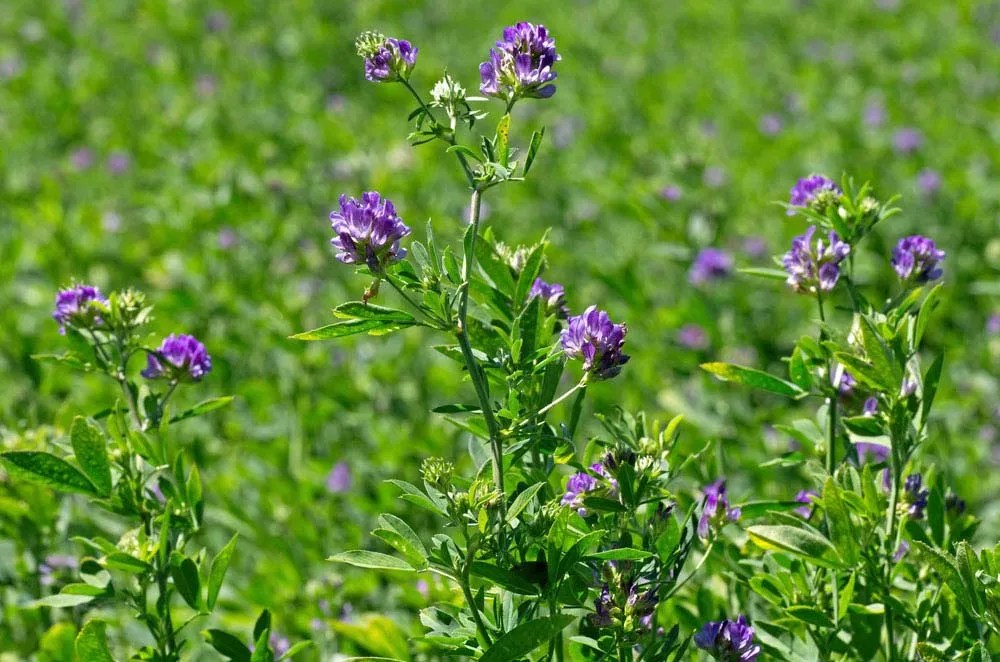
Medicago sativa
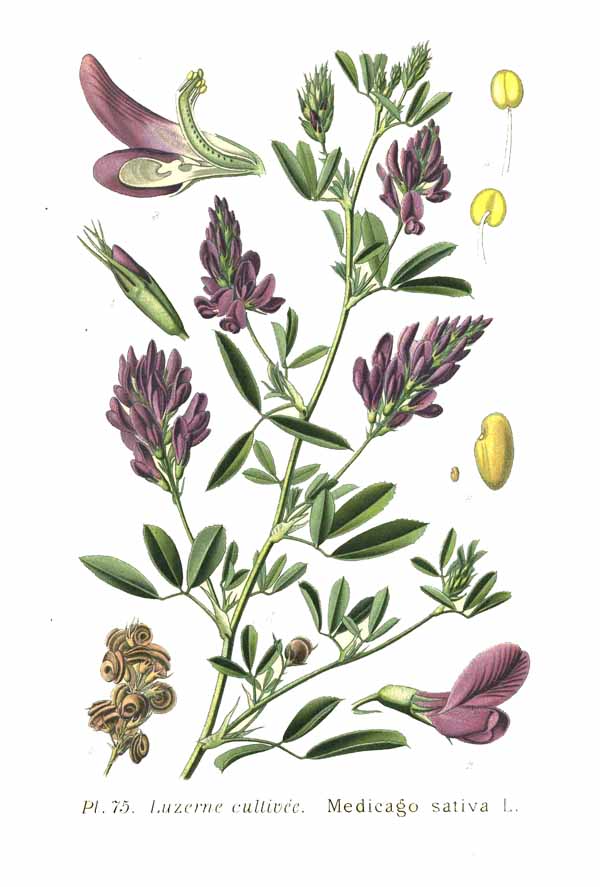
Alfalfa, a hardy perennial, can be spotted along field edges, in low valleys, and is commonly cultivated. This plant features an upright, sleek stem that sprouts from an extended taproot, reaching a height of 12 to 18 inches. During the months of June through August, it showcases pinnately trifoliate leaves and elongated, oblong-obovate racemes. Eventually, it produces its distinctive seed pods, known for their intriguing spiral coil shape.
Other Names
Buffalo Herb, Lucerne, Purple Medic, Jat, Qadb
Magical Uses
Alfalfa, a potent symbol for prosperity and abundance, can be a wonderful addition to your home. To ward off financial struggles and hunger, place it in a compact jar within your cupboard or pantry. You can also enhance its impact by burning alfalfa and spreading the ashes around your property. This versatile herb is often utilized in money spells to attract wealth and financial well-being.
Medicinal Uses
Alfalfa tea isn’t just a delightful beverage; it also offers various health benefits. Incorporating this tea into your daily routine can enhance your appetite, ease urinary and digestive issues, reduce water retention, and even contribute to the healing of peptic ulvers.
Harvesting:
The leaves of the plant are used.
Preparation:
Steep the dried leaves to create a tea, varying the quantity of dried of leaves and the length of the steep to taste.
How to Grow
For cooler regions, spring planting is ideal, while milder areas should consider fall planting. Alfalfa’s quick root development means you only need to plant it about half an inch deep. Simply sprinkle the seeds evenly on the soil and lightly cover them with dirt. Typically, sprouts should emerge within seven to ten days. As the seedlings grow to around 6 to 12 inches, thin them out as necessary to prevent overcrowding.
Alfalfa is a versatile plant that can thrive in various garden conditions. It’s resilient, tolerating a wide range of environments, making it a great choice for drought-prone regions. However, it’s important to note that alfalfa doesn’t favor excessive moisture, as its prone to mold growth. When choosing a location for your alfalfa, prioritize full sun exposure. Additionally, opt for well-draining soil with a pH level ranging from 6.8 to 7.5. Prior to planting, ensure the area is clean, work the soil, and remove any debris. You can typically purchase pure alfalfa seeds from most feed supply store.
 seaxwica.org